RERA Act

 Maharashtra
 Karnataka
 Telangana
 Andhra Pradesh
 Delhi
Delhi
 Uttar Pradesh
 Haryana
 Gujarat
 Bihar
Bihar
- General
- Author: Riya Kapoor
Highlights
-
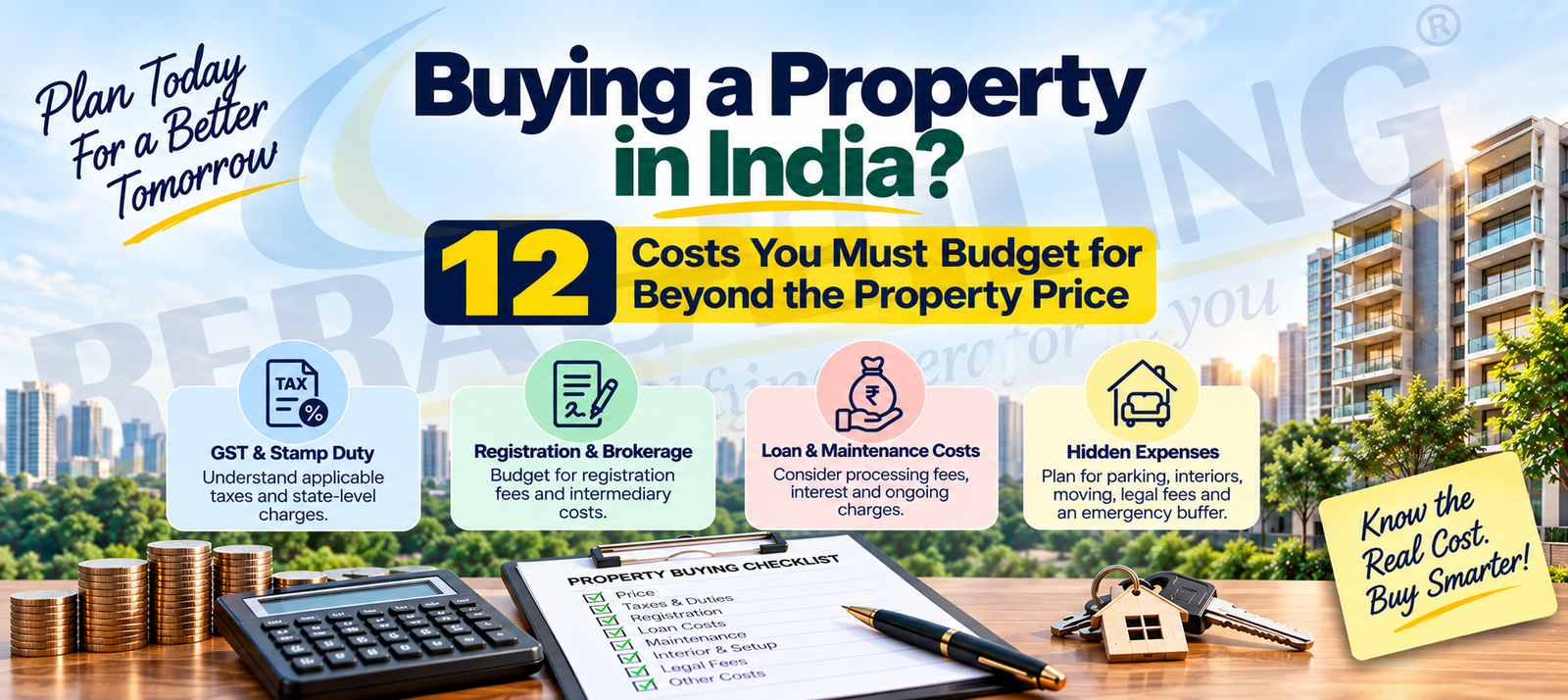
GST & Stamp Duty – Understand applicable taxes and state-level charges.
-
Registration & Brokerage – Budget for registration fees and intermediary costs.
-
Loan & Maintenance Costs – Consider processing fees, interest and ongoing charges.
-
Hidden Expenses – Plan for parking, interiors, moving, legal fees and an emergency buffer.
Introduction
Buying a property is one of the biggest financial decisions you may make. But the amount you pay to the builder or seller is not necessarily the final cost of owning the property.
Depending on the type of property, state, transaction structure and financing, buyers may also need to consider GST, stamp duty, registration charges, brokerage, maintenance deposits, loan-related charges and other expenses.
Understanding these costs before booking a property can help you prepare a realistic budget and avoid unexpected financial pressure.
1. Property Price
The first and most obvious cost is the basic property price.
However, buyers should carefully understand what is included in the quoted price.
Ask for a clear breakup of:
- Basic sale price
- Floor-rise charges, if applicable
- Preferential location charges
- Parking charges
- Clubhouse/amenity charges
- Other applicable charges
2. GST
GST treatment
depends on the nature and stage of the property transaction.
For example,
GST treatment for an under-construction residential property can differ
from that of a completed property where the entire consideration is received
after issuance of the completion certificate/first occupation, subject to
applicable law.
Therefore,
don't simply add a fixed GST percentage to every property purchase.
Always verify the applicable GST treatment for the specific transaction.
3. Stamp Duty
Stamp duty is
a state-level charge applicable to certain property transactions.
The rate and
calculation method vary from state to state.
The amount
may depend on factors such as:
- Property value
- Location
- Property type
- Buyer category
- Applicable state rules
4. Registration Charges
Property
documents generally need to be registered with the appropriate authority where
registration is required.
Registration
charges are separate from stamp duty and are governed by applicable state
rules.
Important: Stamp duty + registration can
represent a significant additional amount over the property's quoted price.
5. Brokerage
If a broker
or real-estate intermediary is involved, brokerage may be payable depending on
the arrangement.
Before
engaging a broker, clarify:
Who pays
the brokerage?
How much?
Is GST applicable?
When is it payable?
Get the
commercial terms in writing.
6. Home Loan Costs
If you're
financing your property purchase through a home loan, consider:
- Processing fee
- Legal/technical evaluation charges
- Documentation charges
- Valuation charges, where applicable
- Mortgage-related expenses
- Insurance, if applicable
- Interest cost
Your property
budget should therefore consider the total borrowing cost, not just the EMI.
7. Maintenance & Other Charges
For
apartments and gated communities, buyers may encounter charges related to:
- Maintenance
- Common facilities
- Clubhouse
- Amenities
- Security
- Sinking/reserve funds
- Electricity/water-related deposits
The exact
charges depend on the project and applicable documentation.
8. Parking
Parking
arrangements and charges can vary significantly between projects.
Before
paying, check:
- Whether parking is included
- Type of parking
- Whether additional charges apply
- What is stated in the agreement
Don't assume
that every advertised property price automatically includes parking.
9. Interior & Furnishing Costs
This is often
overlooked.
After
possession, you may spend on:
- Modular kitchen
- Wardrobes
- Lighting
- Curtains
- Furniture
- Appliances
- Electrical modifications
- Decor
For a new
home, these expenses can materially increase your actual ownership cost.
10. Moving & Setup Expenses
Don't forget
smaller costs such as:
- Packers and movers
- New appliances
- Internet installation
- Utility connections
- Painting/modifications
- Basic household setup
Individually these may appear small, but together they can add up
11. Legal & Professional Fees
For a significant property purchase, buyers may also incur professional fees for:
- Property due diligence
- Agreement review
- Legal consultation
- Tax consultation
- Documentation assistance
12. Keep an Emergency Buffer
Don't use every rupee of your available funds for the property purchase.
Keep a separate buffer for:
- Unexpected property expenses
- Loan-related expenses
- Interior work
- Moving costs
- Emergency requirements
RERA Filing's Property-Buying Checklist
Before booking a property, a buyer should consider checking:
- RERA registration
- Project details on the relevant
RERA authority portal
- Promoter details
- Approved plans and project
information
- Possession timeline
- Agreement for Sale
- Payment schedule
- Additional charges
- Cancellation/refund provisions
- Applicable taxes and government
charges
Always verify the current applicable rules and project-specific documents before making a financial commitment.
Conclusion
Buying a
property isn't just about negotiating the sale price.
A smart buyer
calculates the complete acquisition cost, understands the applicable
taxes and government charges, reviews the contractual documents and checks the
project's regulatory information before making a commitment.







Copyright © 2026 RERA Filing. All rights reserved.