RERA Act

 Maharashtra
 Karnataka
 Telangana
 Andhra Pradesh
 Delhi
Delhi
 Uttar Pradesh
 Haryana
 Gujarat
 Bihar
Bihar
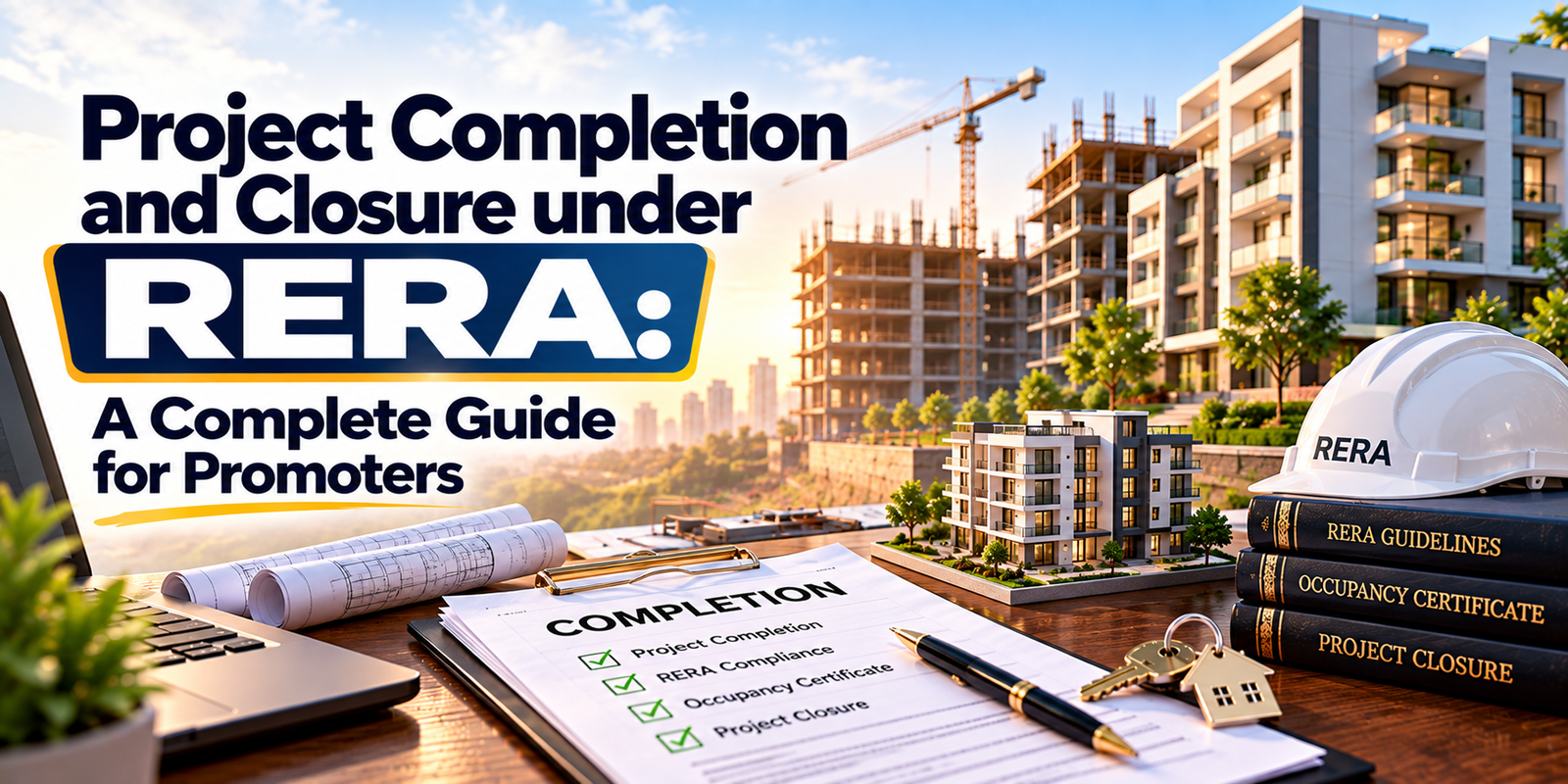
- General
- Author: Riya Kapoor
Highlights
-
Explains the complete RERA project completion and closure process for promoters.
-
Covers mandatory documents including Completion Certificate, Occupancy Certificate, and audit reports.
-
Details legal obligations such as handover to the Association of Allottees and project bank account closure.
-
Highlights common compliance mistakes and post-completion responsibilities under RERA.
Completing a real estate project is not the end of a promoter’s responsibilities under RERA. Even after construction is complete, several legal and compliance requirements must be fulfilled before a project can be officially closed. Failure to complete these formalities may result in regulatory issues and penalties.
In this guide, we’ll explain the project completion and closure process under RERA, the documents required, and the best practices for promoter
What is Project Closure under RERA?
Project closure is the process of informing the State RERA Authority that all obligations related to a registered project have been completed.Closure generally involves:
• Completion of construction
• Obtaining statutory completion certificates
• Handing over possession to allottees
• Formation of the association of allottees (where applicable)
• Filing the final compliance documents with the RERA Authority
Once accepted, the authority records the project as completed in its system.
When Can a Project Be Closed?
A promoter should initiate the closure process after:• Construction is fully completed.
• The Completion Certificate (CC) or Occupancy Certificate (OC), as applicable, has been obtained from the competent authority.
• Possession has been offered to eligible allottees.
• Common areas are completed.
• Statutory obligations under the Act have been fulfilled.
Documents Commonly Required
Although requirements vary from state to state, promoters are generally required to submit:
• Completion Certificate (CC)
• Occupancy Certificate (OC), wherever applicable
• Architect’s completion certificate
• Engineer’s completion certificate
• Chartered Accountant’s final financial certification
• Details of possession offered to allottees
• Details of unsold inventory
• Photographs of the completed project
• Updated project information
• Any state-specific forms prescribed by the authority
Compliance Before Closure
Importance of Completion Certificate
The Completion Certificate confirms that:• Construction has been completed as per the approved plans.
• Building regulations have been complied with.
• Local authority approvals have been obtained.
Without the required completion certification, project closure may not be accepted.
Occupancy Certificate (OC)
For projects where an Occupancy Certificate is applicable, it certifies that the building is fit for occupation.Promoters should obtain the OC before handing over possession unless state regulations provide otherwise.
Final Handover to Allottees
Before closure, promoters should:• Execute registered sale deeds.
• Hand over possession.
• Transfer common areas where required.
• Facilitate formation of the association of allottees.
• Transfer maintenance responsibilities as applicable.
Common Reasons for Delay in Project Closure
Many projects remain open on the RERA portal because of:• Pending Occupancy Certificate
• Missing Completion Certificate
• Incomplete QPR filings
• Pending audit reports
• Differences between actual project status and portal updates
• Incomplete documentation
Best Practices for Promoters
To ensure smooth closure:• Maintain proper construction records.
• Update the RERA portal regularly.
• File all compliance reports within timelines.
• Preserve financial records and certifications.
• Coordinate with architects, engineers, and chartered accountants before submitting the closure application.
Why Timely Closure Matters
Proper project closure helps promoters:• Demonstrate full regulatory compliance.
• Build trust with homebuyers.
• Reduce the risk of notices or penalties.
Maintain a strong compliance record for future projects.












Copyright © 2026 RERA Filing. All rights reserved.