RERA Act

 Maharashtra
 Karnataka
 Telangana
 Andhra Pradesh
 Delhi
Delhi
 Uttar Pradesh
 Haryana
 Gujarat
 Bihar
Bihar
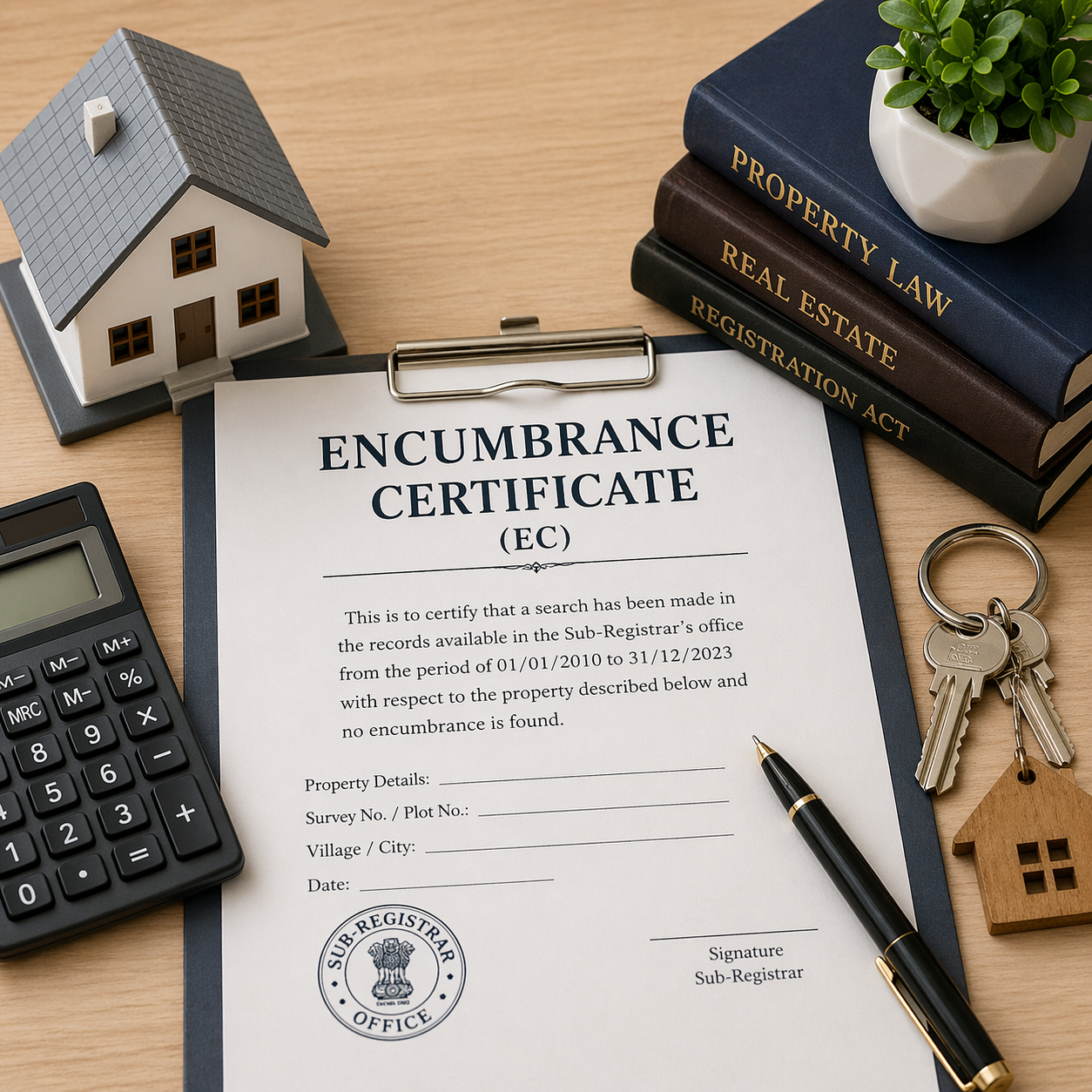
- General
- Author: Riya Kapoor
Highlights
-
Ensures clear property title by showing the ownership history and confirming that the seller has the legal right to sell the property.
-
Reveals any financial liabilities such as loans, mortgages, or legal dues attached to the property, helping buyers avoid risks.
-
Required by banks and financial institutions for home loan approval to verify that the property is free from encumbrances.
-
Acts as an essential document in property transactions, ensuring transparency and protecting buyers from legal disputes.
Introduction
When buying or selling a property, one of the most important
documents you must verify is the Encumbrance Certificate (EC). It
plays a crucial role in ensuring that the property you are dealing with is free
from any legal or financial liabilities. Whether you are a homebuyer, investor,
or developer, understanding the EC is essential for making safe real estate
decisions.
What is an Encumbrance Certificate?
An Encumbrance Certificate (EC) is an
official document issued by the Sub-Registrar’s Office that confirms whether a
property has any monetary or legal liabilities, such as loans, mortgages, or
pending claims.
In simple terms, it helps you verify that the property has
a clear and marketable title.
Why is Encumbrance Certificate Important?
1. Proof of Clear Ownership
The EC shows the history of transactions related to the
property, ensuring that the seller has the legal right to sell it.
2. Reveals Existing Liabilities
It highlights any outstanding loans, mortgages, or legal
dues attached to the property.
3. Mandatory for Home Loans
Banks and financial institutions require an EC before
approving a home loan.
4. Essential for Property Transactions
It is a key document required during buying, selling, or
transferring property ownership.
Types of Encumbrance Certificate
Form 15
Issued when the property has registered transactions (like
sale, mortgage, lease, etc.) during the requested period.
Form 16
Also known as a Nil Encumbrance Certificate, it
is issued when no transactions or liabilities are found for the given period.
How to Apply for an Encumbrance Certificate
Online Process
- Visit
your state’s property registration portal
- Fill
in property details (survey number, location, etc.)
- Select
the required time period
- Pay
the applicable fee
- Download
the EC once generated
Offline Process
- Visit
the Sub-Registrar’s Office
- Submit
Form 22 with property details
- Attach
required documents
- Pay
the fee
- Collect
the EC after processing
Documents Required
- Property
details (Survey No./Address)
- Sale
deed or title document
- Identity
proof of applicant
- Application
form
Charges and Time Required
- Charges: Vary
from state to state (usually nominal)
- Processing
Time:
- Online:
2–3 working days
- Offline:
7–15 days
Common Mistakes to Avoid
- Not
checking EC for a sufficient number of years (recommended: 10–15 years)
- Assuming
EC shows all types of liabilities (it only includes registered
transactions)
- Ignoring
discrepancies in names or property details
- Not
cross-verifying with other legal documents
Conclusion
An Encumbrance Certificate is a must-have document for
anyone involved in real estate. It safeguards you from legal disputes and
ensures that your property investment is secure.
Before finalizing any property deal, always verify the EC
thoroughly.











Copyright © 2026 RERA Filing. All rights reserved.